How Many Calories Do You Really Need? The Complete Energy Balance, BMR & Macro Guide | CalculatorLoop | Calculator Loop
health
Verified Guide
How Many Calories Do You Really Need? The Complete Energy Balance, BMR & Macro Guide
Learn how many calories you really need. Discover Mifflin-St Jeor BMR math, 4 pillars of TDEE, precision deficits for fat loss, and macro distributions.
🩺
CalculatorLoop Health & Fitness Expert Team
Health Specialists
Reviewed by Certified Nutrition & Fitness Specialists
15 min read
Calculate This Instantly
Test your numbers directly with our free, real-time calculator.
Table of Contents
How Many Calories Do You Really Need? The Complete Energy Balance, BMR & Macro Guide
Every day, millions of people ask the fundamental question of human nutrition: "How many calories should I eat?"
Yet, when searching for an answer, you are often met with one-size-fits-all generalizations—like the ubiquitous 2,000-calorie FDA standard on nutrition labels—or extreme diet philosophies claiming that calories do not matter, and only carbs, insulin, or meal timing dictate body weight.
The biological reality confirmed by over a century of metabolic ward studies and nutritional biochemistry is unequivocal: body weight regulation is fundamentally dictated by energy balance. However, your exact personal caloric requirement is not a static number written on a cereal box. It is a dynamic physiological variable determined by your age, sex, height, body weight, skeletal muscle mass, endocrine function, and daily physical activity level.
In this definitive guide prepared by the CalculatorLoop Nutrition & Exercise Physiology Team, we demystify caloric requirements from the ground up. We break down the four components of your daily energy expenditure, walk through the clinically validated Mifflin-St Jeor and Katch-McArdle equations, explain how to establish precision deficits for fat loss or surpluses for muscle gain, translate raw calories into optimal macronutrient ratios (protein, fats, carbohydrates), and provide strategies to overcome metabolic adaptation and weight plateaus.
1. What is a Calorie? The Universal Energy Currency of the Human Body
In physics and nutritional science, a calorie is a unit of measurement for thermal energy:
Small calorie (cal): The amount of energy required to raise the temperature of 1 gram of water by 1 degree Celsius at 1 atmosphere of pressure.
Kilocalorie (kcal or food Calorie with a capital 'C'): Equal to 1,000 small calories. This is the unit used when we evaluate food intake or energy expenditure. When a food label states "250 Calories," it represents 250 kilocalories (kcal) of chemical energy stored within the molecular bonds of that food.
The CalculatorLoop Health & Fitness Expert Team combines verified medical physiology guidelines, metabolic science, and exercise biomechanics to provide accurate, safe health estimations.
Put this knowledge to use with our free financial calculators
health
Verified Guide
How Many Calories Do You Really Need? The Complete Energy Balance, BMR & Macro Guide
Learn how many calories you really need. Discover Mifflin-St Jeor BMR math, 4 pillars of TDEE, precision deficits for fat loss, and macro distributions.
🩺
CalculatorLoop Health & Fitness Expert Team
Health Specialists
Reviewed by Certified Nutrition & Fitness Specialists
15 min read
Calculate This Instantly
Test your numbers directly with our free, real-time calculator.
Table of Contents
How Many Calories Do You Really Need? The Complete Energy Balance, BMR & Macro Guide
Every day, millions of people ask the fundamental question of human nutrition: "How many calories should I eat?"
Yet, when searching for an answer, you are often met with one-size-fits-all generalizations—like the ubiquitous 2,000-calorie FDA standard on nutrition labels—or extreme diet philosophies claiming that calories do not matter, and only carbs, insulin, or meal timing dictate body weight.
The biological reality confirmed by over a century of metabolic ward studies and nutritional biochemistry is unequivocal: body weight regulation is fundamentally dictated by energy balance. However, your exact personal caloric requirement is not a static number written on a cereal box. It is a dynamic physiological variable determined by your age, sex, height, body weight, skeletal muscle mass, endocrine function, and daily physical activity level.
In this definitive guide prepared by the CalculatorLoop Nutrition & Exercise Physiology Team, we demystify caloric requirements from the ground up. We break down the four components of your daily energy expenditure, walk through the clinically validated Mifflin-St Jeor and Katch-McArdle equations, explain how to establish precision deficits for fat loss or surpluses for muscle gain, translate raw calories into optimal macronutrient ratios (protein, fats, carbohydrates), and provide strategies to overcome metabolic adaptation and weight plateaus.
1. What is a Calorie? The Universal Energy Currency of the Human Body
In physics and nutritional science, a calorie is a unit of measurement for thermal energy:
Small calorie (cal): The amount of energy required to raise the temperature of 1 gram of water by 1 degree Celsius at 1 atmosphere of pressure.
Kilocalorie (kcal or food Calorie with a capital 'C'): Equal to 1,000 small calories. This is the unit used when we evaluate food intake or energy expenditure. When a food label states "250 Calories," it represents 250 kilocalories (kcal) of chemical energy stored within the molecular bonds of that food.
The CalculatorLoop Health & Fitness Expert Team combines verified medical physiology guidelines, metabolic science, and exercise biomechanics to provide accurate, safe health estimations.
When you consume carbohydrates, proteins, fats, and alcohol, your digestive system breaks these macromolecules down into glucose, amino acids, fatty acids, and ketone bodies. These substrates enter cellular respiration pathways (such as glycolysis and the citric acid cycle) to synthesize adenosine triphosphate (ATP)—the cellular fuel that powers every heartbeat, muscular contraction, and neurological signal in your body.
2. The Thermodynamic Laws of Weight Regulation (CICO Explained)
The foundational principle underlying weight loss, weight gain, and weight maintenance is the First Law of Thermodynamics (the Law of Conservation of Energy), adapted to biological systems:
Delta Internal Energy of Body = Energy In - Energy Out
This relationship is commonly referred to in exercise science as Calories In, Calories Out (CICO):
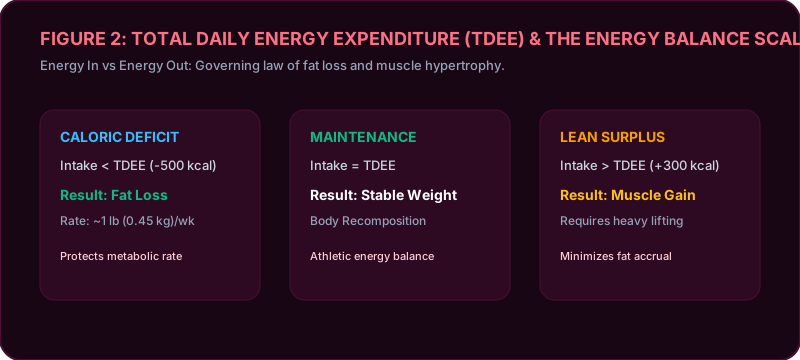
Caloric Equilibrium (Maintenance): Energy In = Energy Out. Your body weight remains stable over time.
Hypocaloric State (Negative Energy Balance / Deficit): Energy In < Energy Out. Your body must tap into internal energy stores (primarily adipose tissue and glycogen reserves) to make up the deficit. Result: Weight Loss.
Hypercaloric State (Positive Energy Balance / Surplus): Energy In > Energy Out. The excess unoxidized chemical energy is stored in adipocytes (fat cells) or utilized to build new lean muscle tissue. Result: Weight Gain.
[!NOTE]
CICO is not a diet philosophy—it is a physical law. However, "Calories In" and "Calories Out" are not completely independent; they continuously influence and regulate one another through hormonal and metabolic feedback loops.
3. The 4 Pillars of Total Daily Energy Expenditure (TDEE)
Figure 1: Total Daily Energy Expenditure (TDEE) & Energy Balance
Your Total Daily Energy Expenditure (TDEE) represents the total number of calories your body burns in a complete 24-hour cycle. It consists of four distinct physiological components:
TDEE = BMR + NEAT + TEF + EAT
Component
Share of Total Burn
Description & Primary Function
Basal Metabolic Rate (BMR)
60% – 70%
Cellular maintenance, respiration, circulation, brain & organ metabolism
1. Basal Metabolic Rate (BMR) — 60% to 70% of TDEE
BMR is the baseline energy required to sustain life in a completely resting, post-absorptive state at thermoneutral room temperature. It powers:
Cellular sodium-potassium pumps (~20–25%)
Central nervous system and brain activity (~20%)
Liver metabolic synthesis and filtration (~20%)
Cardiac contractions and lung ventilation (~15%)
Kidney, gastrointestinal, and endocrine maintenance (~20%)
You can determine your baseline BMR with our BMR Calculator.
2. Non-Exercise Activity Thermogenesis (NEAT) — 15% to 20% of TDEE
NEAT encompasses all energy expended for everything we do that is not sleeping, eating, or dedicated sports-like exercise. It includes walking to the bus stop, typing on a keyboard, fidgeting, gardening, pacing while on phone calls, carrying groceries, and maintaining upright posture.
NEAT is the most variable component of human metabolism, varying by up to 800 to 1,000 calories per day between a sedentary desk worker and an active individual who walks 12,000 steps daily.
3. Thermic Effect of Food (TEF) — 8% to 10% of TDEE
TEF represents the metabolic cost of digesting, absorbing, transporting, and storing ingested nutrients. Not all calories are processed with equal efficiency:
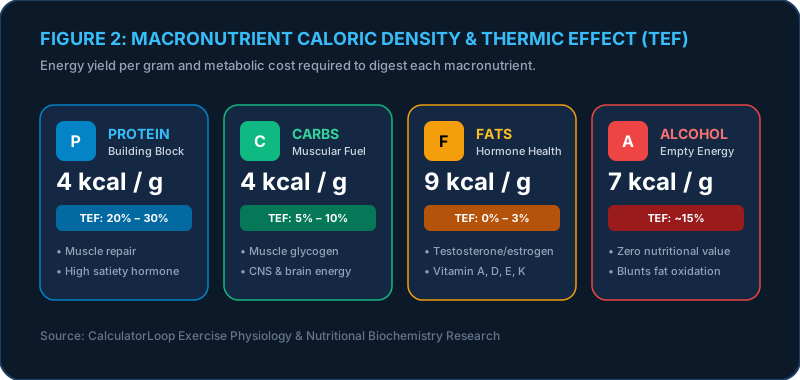
Protein: 20% to 30% of ingested calories are burned off purely during digestion.
Carbohydrates: 5% to 10% of calories burned.
Fats: 0% to 3% of calories burned.
Clinical Insight: Eating a high-protein diet automatically boosts your daily caloric burn because your body must expend significant energy breaking down complex peptide bonds.
4. Exercise Activity Thermogenesis (EAT) — 5% to 10% of TDEE
EAT is the energy burned during planned physical exercise—such as weight lifting, running on a treadmill, cycling, swimming, or playing sports. Surprisingly, for most people who work out for 45 to 60 minutes a few times a week, EAT accounts for a relatively minor fraction of total daily caloric expenditure.
4. How to Calculate Your BMR: The Scientific Equations
To compute your daily caloric needs, you must first calculate your Basal Metabolic Rate using clinically validated mathematical models.
1. The Mifflin-St Jeor Equation (Modern Clinical Standard)
Established in 1990 by Mifflin and St Jeor and validated by the Academy of Nutrition and Dietetics as the most accurate predictive equation for non-obese and obese healthy adults:
For Men: BMR = 10 × Weight (kg) + 6.25 × Height (cm) - 5 × Age (years) + 5
For Women: BMR = 10 × Weight (kg) + 6.25 × Height (cm) - 5 × Age (years) - 161
2. The Katch-McArdle Equation (For Those Who Know Body Fat %)
If you have had your body fat percentage measured accurately via DEXA, hydrostatic weighing, or calibrated calipers, the Katch-McArdle formula provides superior precision because it calculates metabolic burn directly from Lean Body Mass (LBM), ignoring inert fat mass:
Lean Body Mass (kg) = Weight (kg) × (1 - frac{Body Fat %}{100})
BMR = 370 + (21.6 × Lean Body Mass in kg)
Step-by-Step Manual Calculation Example
Let us compute the daily BMR for a 35-year-old male:
Weight = 80 kg
Height = 180 cm
Age = 35 years
10 × 80 = 800
6.25 × 180 = 1,125
5 × 35 = 175
BMR = 800 + 1,125 - 175 + 5 = 1,755 kcal/day
His body burns approximately 1,755 calories per day just to stay alive at absolute rest.
5. From BMR to TDEE: Applying Physical Activity Multipliers
Once your BMR is determined, you multiply it by a Physical Activity Level (PAL) factor to estimate your total maintenance calories:
Activity Level
Multiplier
Description & Weekly Training Profile
Sedentary
1.200
Desk job, little or no formal exercise, < 4,000 steps/day
Lightly Active
1.375
Light exercise or sports 1–3 days/week, 5,000–7,500 steps/day
Moderately Active
1.550
Moderate exercise or sports 3–5 days/week, 8,000–10,000 steps/day
Very Active
1.725
Hard exercise or sports 6–7 days/week, active physical job
Extremely Active
1.900
Competitive athlete, heavy physical labor (construction, mining)
Continuing our previous example:
If our 35-year-old male with a BMR of 1,755 kcal works a desk job but trains in the gym 4 days a week with 8,500 daily steps (Moderately Active - 1.55):
TDEE = 1,755 × 1.55 = 2,720 kcal/day
His true baseline maintenance requirement is 2,720 calories per day. To maintain his current weight of 80 kg, he must consume approximately 2,720 calories daily.
Once your baseline maintenance TDEE is established, you adjust your daily caloric intake based on your specific body composition objective:
Objective A: Sustainable Fat Loss (Hypocaloric Deficit)
The Golden Rule: Avoid crash starvation diets (< 1,200 kcal for women, < 1,500 kcal for men). Extreme deficits trigger muscle wasting, hormonal suppression (leptin drops, thyroid T3 downregulates), and massive rebound overeating.
Target Deficit: Create a moderate deficit of 15% to 25% below TDEE (typically 300 to 600 kcal/day).
Projected Fat Loss: 3,500 kcal roughly equals 0.45 kg (1 lb) of fat tissue. A daily deficit of 500 kcal yields ~0.45 kg (1 lb) of pure fat loss per week.
The Golden Rule: The human body has an upper physiological ceiling for synthesizing new skeletal muscle tissue (approximately 0.5 to 1.0 kg of muscle per month for drug-free individuals). Excess calories beyond this limit are stored as body fat.
Target Surplus: Create a conservative surplus of 5% to 10% above TDEE (typically 150 to 300 kcal/day).
Example Target: 2,720 + 250 = 2,970 kcal/day.
7. Converting Calories into Food: Precision Macronutrient Ratios
Figure 2: Macronutrient Caloric Density & Thermic Effect
Knowing your total caloric target is only half the battle; where those calories come from determines whether you lose fat or muscle, feel energized or exhausted, and manage hunger successfully.
Each macronutrient provides a specific energy density:
Protein: 4 calories per gram
Carbohydrates: 4 calories per gram
Fats: 9 calories per gram
Alcohol: 7 calories per gram (empty calories with zero nutritional value)
The Ideal Macronutrient Blueprint (For a 2,220 kcal Fat Loss Target)
1. Protein: 1.6 to 2.2 grams per kg of body weight
Essential for sparing lean muscle mass and elevating satiety hormones (GLP-1, PYY). Compute your exact requirement with our Protein Calculator.
2. Dietary Fats: 20% to 30% of total calories
Essential for endocrine hormone production (testosterone, estrogen), fat-soluble vitamin absorption (A, D, E, K), and cellular membrane integrity.
3. Carbohydrates: The Remaining Calorie Balance
Primary fuel source for high-intensity muscular contractions, central nervous system performance, and thyroid regulation.
Plan your customized meal distributions with our Macro Calculator.
8. Overcoming Metabolic Adaptation and Weight Loss Plateaus
A common experience during weight loss is the "stall"—you consume the same calories, but after 8 to 12 weeks, the scale stops moving. Why does this happen?
The Biology of Adaptive Thermogenesis
As your body loses weight, your daily energy expenditure decreases for two reasons:
Physical Mass Reduction: An 80 kg body naturally requires fewer calories to move and survive than an 88 kg body.
Adaptive Downregulation (Metabolic Adaptation): Your body interprets prolonged caloric deficits as potential famine. In response:
Spontaneous NEAT drops (you subconsciously sit more and fidget less).
Thyroid hormone T3 decreases.
Leptin levels plunge while ghrelin spikes, making you chronically hungry.
How to Break a Plateau Safely
Audit Hidden Calories: Cooking oils, salad dressings, sauces, and liquid drinks often add 200–400 uncounted calories daily. Use a digital food scale for 7 days to eliminate tracking errors.
Implement a Diet Break (Refeed Window): Temporarily increase calories to your new maintenance level for 7 to 14 days, with the extra calories coming exclusively from carbohydrates. This restores circulating leptin, revitalizes thyroid output, replenishes muscle glycogen, and relieves psychological diet fatigue without gaining body fat.
Boost NEAT Instead of Starving: Instead of slashing calories from 2,000 down to 1,500, keep food at 2,000 and increase your daily step count from 6,000 to 11,000 steps.
9. Food Quality Matters: The Satiety and Micronutrient Spectrum
While thermodynamics dictates scale weight, food quality dictates how you feel, your lipid biomarkers, and your ability to stick to the plan:
The Satiety Index: 500 calories of boiled potatoes, chicken breast, and broccoli occupies vast physical space in the stomach, stimulating mechanoreceptors and satiety hormones (cholecystokinin, GLP-1). 500 calories of potato chips or sugary soda is digested in minutes, stimulating hunger centers in the brain.
Fiber Intake: Aim for 14 grams of dietary fiber per 1,000 calories consumed. Fiber slows gastric emptying, blunts post-prandial blood sugar spikes, and feeds beneficial gut microbiota.
Micronutrient Density: Chronic vitamin D, magnesium, zinc, or iron deficiencies degrade metabolic efficiency and disrupt sleep quality.
10. Frequently Asked Questions (FAQ)
Q1. How many calories should I eat to lose 1 kg (2.2 lbs) of fat?
One kilogram of human adipose body fat contains approximately 7,700 kcal of stored chemical energy. To lose 1 kg of fat, you must accumulate a cumulative caloric deficit of 7,700 kcal. Spreading this over two weeks requires an average daily deficit of approximately 550 kcal per day, which represents a safe, medically sound pace of fat loss.
Q2. Is the 2,000-calorie diet right for everyone?
No. The 2,000-calorie benchmark is a generic reference standard created by public health agencies for uniform nutrition labeling. A petite 5'1" sedentary woman may have a daily maintenance requirement of only 1,500 calories, meaning 2,000 calories would cause steady weight gain. Conversely, a 6'2" active athletic male may require 3,200 calories just to maintain weight.
Q3. Can eating too few calories put you into "starvation mode"?
The popular belief that eating 1,200 calories causes your body to "stop burning fat and store everything as fat" is scientifically inaccurate; the laws of thermodynamics still apply. However, extreme starvation diets cause severe hormonal downregulation, loss of lean muscle mass, and extreme lethargy, causing your daily NEAT and resting metabolic rate to plummet, effectively stalling fat loss.
Q4. Does meal timing (intermittent fasting) change calorie burning?
Controlled clinical trials demonstrate that when total daily calories and protein are kept equal, eating 6 small meals versus eating within an 8-hour intermittent fasting window results in essentially identical amounts of fat loss. Intermittent fasting works primarily as an effective behavioral tool to help people control total daily caloric intake.
Q5. Why does my weight fluctuate by 1 to 2 kg from day to day?
Daily weight swings are almost entirely caused by water retention, sodium fluctuations, and digestive contents (food volume), not overnight gains or losses of body fat. For every 1 gram of carbohydrate stored as muscle glycogen, your body binds approximately 3 to 4 grams of water. Always evaluate weight using a 7-day rolling weekly average rather than reacting to single-day scale fluctuations.
Q6. Should I eat back the calories my fitness tracker says I burned during a workout?
Be very cautious. Independent validation studies published in the Journal of Personalized Medicine revealed that consumer smartwatches and fitness trackers frequently overestimate exercise energy expenditure by 25% to 50%. If your watch claims you burned 600 calories and you eat all 600 calories back, you may inadvertently eliminate your caloric deficit.
Conclusion: Start with Science, Adjust with Reality
Knowing your exact caloric needs removes the guesswork, frustration, and anxiety from nutrition. By calculating your BMR accurately, establishing realistic activity multipliers, setting a modest deficit or surplus, and balancing your macronutrients, you unlock predictable, sustainable control over your body composition.
Remember that calculations provide an educated, scientific starting estimate. Track your intake, record your weekly average weight, observe your gym performance, and fine-tune your caloric intake by 100 to 150 calories every few weeks based on real-world results.
Ready to find your personal caloric target?
Calculate your exact maintenance, fat loss, and muscle-building numbers today with our Free Interactive Calorie Calculator.
7.
7. Converting Calories into Food: Precision Macronutrient Ratios
When you consume carbohydrates, proteins, fats, and alcohol, your digestive system breaks these macromolecules down into glucose, amino acids, fatty acids, and ketone bodies. These substrates enter cellular respiration pathways (such as glycolysis and the citric acid cycle) to synthesize adenosine triphosphate (ATP)—the cellular fuel that powers every heartbeat, muscular contraction, and neurological signal in your body.
2. The Thermodynamic Laws of Weight Regulation (CICO Explained)
The foundational principle underlying weight loss, weight gain, and weight maintenance is the First Law of Thermodynamics (the Law of Conservation of Energy), adapted to biological systems:
Delta Internal Energy of Body = Energy In - Energy Out
This relationship is commonly referred to in exercise science as Calories In, Calories Out (CICO):
Caloric Equilibrium (Maintenance): Energy In = Energy Out. Your body weight remains stable over time.
Hypocaloric State (Negative Energy Balance / Deficit): Energy In < Energy Out. Your body must tap into internal energy stores (primarily adipose tissue and glycogen reserves) to make up the deficit. Result: Weight Loss.
Hypercaloric State (Positive Energy Balance / Surplus): Energy In > Energy Out. The excess unoxidized chemical energy is stored in adipocytes (fat cells) or utilized to build new lean muscle tissue. Result: Weight Gain.
[!NOTE]
CICO is not a diet philosophy—it is a physical law. However, "Calories In" and "Calories Out" are not completely independent; they continuously influence and regulate one another through hormonal and metabolic feedback loops.
3. The 4 Pillars of Total Daily Energy Expenditure (TDEE)
Figure 1: Total Daily Energy Expenditure (TDEE) & Energy Balance
Your Total Daily Energy Expenditure (TDEE) represents the total number of calories your body burns in a complete 24-hour cycle. It consists of four distinct physiological components:
TDEE = BMR + NEAT + TEF + EAT
Component
Share of Total Burn
Description & Primary Function
Basal Metabolic Rate (BMR)
60% – 70%
Cellular maintenance, respiration, circulation, brain & organ metabolism
1. Basal Metabolic Rate (BMR) — 60% to 70% of TDEE
BMR is the baseline energy required to sustain life in a completely resting, post-absorptive state at thermoneutral room temperature. It powers:
Cellular sodium-potassium pumps (~20–25%)
Central nervous system and brain activity (~20%)
Liver metabolic synthesis and filtration (~20%)
Cardiac contractions and lung ventilation (~15%)
Kidney, gastrointestinal, and endocrine maintenance (~20%)
You can determine your baseline BMR with our BMR Calculator.
2. Non-Exercise Activity Thermogenesis (NEAT) — 15% to 20% of TDEE
NEAT encompasses all energy expended for everything we do that is not sleeping, eating, or dedicated sports-like exercise. It includes walking to the bus stop, typing on a keyboard, fidgeting, gardening, pacing while on phone calls, carrying groceries, and maintaining upright posture.
NEAT is the most variable component of human metabolism, varying by up to 800 to 1,000 calories per day between a sedentary desk worker and an active individual who walks 12,000 steps daily.
3. Thermic Effect of Food (TEF) — 8% to 10% of TDEE
TEF represents the metabolic cost of digesting, absorbing, transporting, and storing ingested nutrients. Not all calories are processed with equal efficiency:
Protein: 20% to 30% of ingested calories are burned off purely during digestion.
Carbohydrates: 5% to 10% of calories burned.
Fats: 0% to 3% of calories burned.
Clinical Insight: Eating a high-protein diet automatically boosts your daily caloric burn because your body must expend significant energy breaking down complex peptide bonds.
4. Exercise Activity Thermogenesis (EAT) — 5% to 10% of TDEE
EAT is the energy burned during planned physical exercise—such as weight lifting, running on a treadmill, cycling, swimming, or playing sports. Surprisingly, for most people who work out for 45 to 60 minutes a few times a week, EAT accounts for a relatively minor fraction of total daily caloric expenditure.
4. How to Calculate Your BMR: The Scientific Equations
To compute your daily caloric needs, you must first calculate your Basal Metabolic Rate using clinically validated mathematical models.
1. The Mifflin-St Jeor Equation (Modern Clinical Standard)
Established in 1990 by Mifflin and St Jeor and validated by the Academy of Nutrition and Dietetics as the most accurate predictive equation for non-obese and obese healthy adults:
For Men: BMR = 10 × Weight (kg) + 6.25 × Height (cm) - 5 × Age (years) + 5
For Women: BMR = 10 × Weight (kg) + 6.25 × Height (cm) - 5 × Age (years) - 161
2. The Katch-McArdle Equation (For Those Who Know Body Fat %)
If you have had your body fat percentage measured accurately via DEXA, hydrostatic weighing, or calibrated calipers, the Katch-McArdle formula provides superior precision because it calculates metabolic burn directly from Lean Body Mass (LBM), ignoring inert fat mass:
Lean Body Mass (kg) = Weight (kg) × (1 - frac{Body Fat %}{100})
BMR = 370 + (21.6 × Lean Body Mass in kg)
Step-by-Step Manual Calculation Example
Let us compute the daily BMR for a 35-year-old male:
Weight = 80 kg
Height = 180 cm
Age = 35 years
10 × 80 = 800
6.25 × 180 = 1,125
5 × 35 = 175
BMR = 800 + 1,125 - 175 + 5 = 1,755 kcal/day
His body burns approximately 1,755 calories per day just to stay alive at absolute rest.
5. From BMR to TDEE: Applying Physical Activity Multipliers
Once your BMR is determined, you multiply it by a Physical Activity Level (PAL) factor to estimate your total maintenance calories:
Activity Level
Multiplier
Description & Weekly Training Profile
Sedentary
1.200
Desk job, little or no formal exercise, < 4,000 steps/day
Lightly Active
1.375
Light exercise or sports 1–3 days/week, 5,000–7,500 steps/day
Moderately Active
1.550
Moderate exercise or sports 3–5 days/week, 8,000–10,000 steps/day
Very Active
1.725
Hard exercise or sports 6–7 days/week, active physical job
Extremely Active
1.900
Competitive athlete, heavy physical labor (construction, mining)
Continuing our previous example:
If our 35-year-old male with a BMR of 1,755 kcal works a desk job but trains in the gym 4 days a week with 8,500 daily steps (Moderately Active - 1.55):
TDEE = 1,755 × 1.55 = 2,720 kcal/day
His true baseline maintenance requirement is 2,720 calories per day. To maintain his current weight of 80 kg, he must consume approximately 2,720 calories daily.
Once your baseline maintenance TDEE is established, you adjust your daily caloric intake based on your specific body composition objective:
Objective A: Sustainable Fat Loss (Hypocaloric Deficit)
The Golden Rule: Avoid crash starvation diets (< 1,200 kcal for women, < 1,500 kcal for men). Extreme deficits trigger muscle wasting, hormonal suppression (leptin drops, thyroid T3 downregulates), and massive rebound overeating.
Target Deficit: Create a moderate deficit of 15% to 25% below TDEE (typically 300 to 600 kcal/day).
Projected Fat Loss: 3,500 kcal roughly equals 0.45 kg (1 lb) of fat tissue. A daily deficit of 500 kcal yields ~0.45 kg (1 lb) of pure fat loss per week.
The Golden Rule: The human body has an upper physiological ceiling for synthesizing new skeletal muscle tissue (approximately 0.5 to 1.0 kg of muscle per month for drug-free individuals). Excess calories beyond this limit are stored as body fat.
Target Surplus: Create a conservative surplus of 5% to 10% above TDEE (typically 150 to 300 kcal/day).
Example Target: 2,720 + 250 = 2,970 kcal/day.
7. Converting Calories into Food: Precision Macronutrient Ratios
Figure 2: Macronutrient Caloric Density & Thermic Effect
Knowing your total caloric target is only half the battle; where those calories come from determines whether you lose fat or muscle, feel energized or exhausted, and manage hunger successfully.
Each macronutrient provides a specific energy density:
Protein: 4 calories per gram
Carbohydrates: 4 calories per gram
Fats: 9 calories per gram
Alcohol: 7 calories per gram (empty calories with zero nutritional value)
The Ideal Macronutrient Blueprint (For a 2,220 kcal Fat Loss Target)
1. Protein: 1.6 to 2.2 grams per kg of body weight
Essential for sparing lean muscle mass and elevating satiety hormones (GLP-1, PYY). Compute your exact requirement with our Protein Calculator.
2. Dietary Fats: 20% to 30% of total calories
Essential for endocrine hormone production (testosterone, estrogen), fat-soluble vitamin absorption (A, D, E, K), and cellular membrane integrity.
3. Carbohydrates: The Remaining Calorie Balance
Primary fuel source for high-intensity muscular contractions, central nervous system performance, and thyroid regulation.
Plan your customized meal distributions with our Macro Calculator.
8. Overcoming Metabolic Adaptation and Weight Loss Plateaus
A common experience during weight loss is the "stall"—you consume the same calories, but after 8 to 12 weeks, the scale stops moving. Why does this happen?
The Biology of Adaptive Thermogenesis
As your body loses weight, your daily energy expenditure decreases for two reasons:
Physical Mass Reduction: An 80 kg body naturally requires fewer calories to move and survive than an 88 kg body.
Adaptive Downregulation (Metabolic Adaptation): Your body interprets prolonged caloric deficits as potential famine. In response:
Spontaneous NEAT drops (you subconsciously sit more and fidget less).
Thyroid hormone T3 decreases.
Leptin levels plunge while ghrelin spikes, making you chronically hungry.
How to Break a Plateau Safely
Audit Hidden Calories: Cooking oils, salad dressings, sauces, and liquid drinks often add 200–400 uncounted calories daily. Use a digital food scale for 7 days to eliminate tracking errors.
Implement a Diet Break (Refeed Window): Temporarily increase calories to your new maintenance level for 7 to 14 days, with the extra calories coming exclusively from carbohydrates. This restores circulating leptin, revitalizes thyroid output, replenishes muscle glycogen, and relieves psychological diet fatigue without gaining body fat.
Boost NEAT Instead of Starving: Instead of slashing calories from 2,000 down to 1,500, keep food at 2,000 and increase your daily step count from 6,000 to 11,000 steps.
9. Food Quality Matters: The Satiety and Micronutrient Spectrum
While thermodynamics dictates scale weight, food quality dictates how you feel, your lipid biomarkers, and your ability to stick to the plan:
The Satiety Index: 500 calories of boiled potatoes, chicken breast, and broccoli occupies vast physical space in the stomach, stimulating mechanoreceptors and satiety hormones (cholecystokinin, GLP-1). 500 calories of potato chips or sugary soda is digested in minutes, stimulating hunger centers in the brain.
Fiber Intake: Aim for 14 grams of dietary fiber per 1,000 calories consumed. Fiber slows gastric emptying, blunts post-prandial blood sugar spikes, and feeds beneficial gut microbiota.
Micronutrient Density: Chronic vitamin D, magnesium, zinc, or iron deficiencies degrade metabolic efficiency and disrupt sleep quality.
10. Frequently Asked Questions (FAQ)
Q1. How many calories should I eat to lose 1 kg (2.2 lbs) of fat?
One kilogram of human adipose body fat contains approximately 7,700 kcal of stored chemical energy. To lose 1 kg of fat, you must accumulate a cumulative caloric deficit of 7,700 kcal. Spreading this over two weeks requires an average daily deficit of approximately 550 kcal per day, which represents a safe, medically sound pace of fat loss.
Q2. Is the 2,000-calorie diet right for everyone?
No. The 2,000-calorie benchmark is a generic reference standard created by public health agencies for uniform nutrition labeling. A petite 5'1" sedentary woman may have a daily maintenance requirement of only 1,500 calories, meaning 2,000 calories would cause steady weight gain. Conversely, a 6'2" active athletic male may require 3,200 calories just to maintain weight.
Q3. Can eating too few calories put you into "starvation mode"?
The popular belief that eating 1,200 calories causes your body to "stop burning fat and store everything as fat" is scientifically inaccurate; the laws of thermodynamics still apply. However, extreme starvation diets cause severe hormonal downregulation, loss of lean muscle mass, and extreme lethargy, causing your daily NEAT and resting metabolic rate to plummet, effectively stalling fat loss.
Q4. Does meal timing (intermittent fasting) change calorie burning?
Controlled clinical trials demonstrate that when total daily calories and protein are kept equal, eating 6 small meals versus eating within an 8-hour intermittent fasting window results in essentially identical amounts of fat loss. Intermittent fasting works primarily as an effective behavioral tool to help people control total daily caloric intake.
Q5. Why does my weight fluctuate by 1 to 2 kg from day to day?
Daily weight swings are almost entirely caused by water retention, sodium fluctuations, and digestive contents (food volume), not overnight gains or losses of body fat. For every 1 gram of carbohydrate stored as muscle glycogen, your body binds approximately 3 to 4 grams of water. Always evaluate weight using a 7-day rolling weekly average rather than reacting to single-day scale fluctuations.
Q6. Should I eat back the calories my fitness tracker says I burned during a workout?
Be very cautious. Independent validation studies published in the Journal of Personalized Medicine revealed that consumer smartwatches and fitness trackers frequently overestimate exercise energy expenditure by 25% to 50%. If your watch claims you burned 600 calories and you eat all 600 calories back, you may inadvertently eliminate your caloric deficit.
Conclusion: Start with Science, Adjust with Reality
Knowing your exact caloric needs removes the guesswork, frustration, and anxiety from nutrition. By calculating your BMR accurately, establishing realistic activity multipliers, setting a modest deficit or surplus, and balancing your macronutrients, you unlock predictable, sustainable control over your body composition.
Remember that calculations provide an educated, scientific starting estimate. Track your intake, record your weekly average weight, observe your gym performance, and fine-tune your caloric intake by 100 to 150 calories every few weeks based on real-world results.
Ready to find your personal caloric target?
Calculate your exact maintenance, fat loss, and muscle-building numbers today with our Free Interactive Calorie Calculator.