2D Geometry & Polygons Suite
Rectangle, Square, Parallelogram, Trapezoid, Rhombus & Kite
Perimeter Calculator
Calculate perimeter of shapes.
Recent Calculations
Rigorous Geometric Field Manual
Complete Guide to 2D Polygons, Quadrilaterals & Area Mechanics
Explore geometric classifications, perimeter summations, diagonal relations, and architectural drafting formulas.
Figure 1: Quadrilaterals & Plane Geometry Reference Matrix
Perpendicular diagonal cross-sections, trapezoid medians, and area formulations.
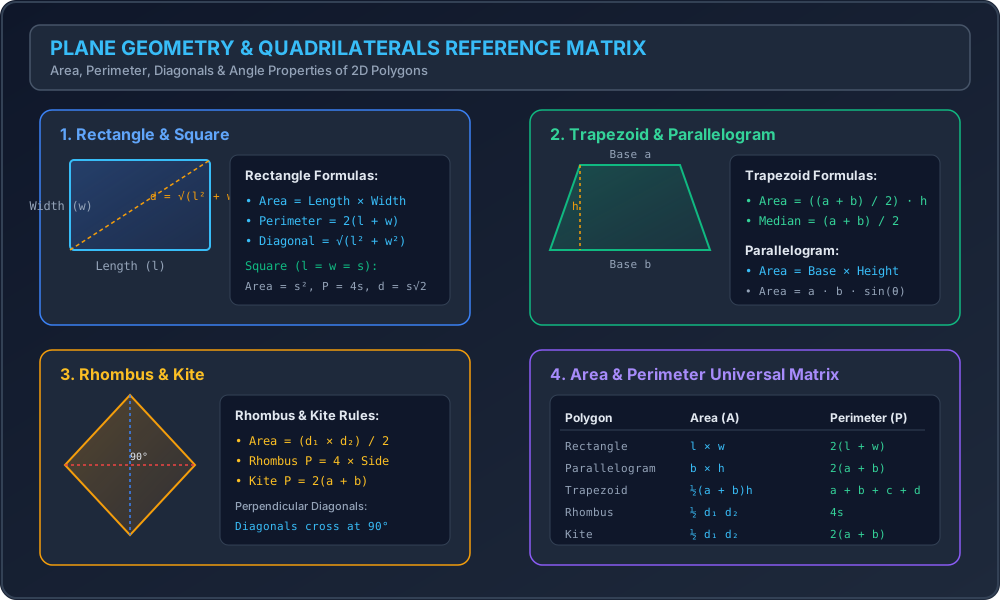
Figure 2: Triangle Geometry & Pythagorean Theorem
Right triangles, hypotenuse solvers, Heron's formula, and integer Pythagorean triples.

1. Classification Hierarchy of Quadrilaterals
A quadrilateral is a four-sided polygon lying within a two-dimensional Euclidean plane. The family of quadrilaterals is organized hierarchically based on parallel sides, side lengths, and interior angle constraints. The sum of the interior angles of any convex quadrilateral is universally 360 degrees (or 2π radians), derived directly from the polygon interior angle sum formula (n - 2) × 180° for n = 4.
At the base of the parallel hierarchy lies the trapezoid (or trapezium in Commonwealth terminology), defined as having at least one pair of parallel opposite sides. If both pairs of opposite sides are parallel, the shape is classified as a parallelogram. A parallelogram with four right angles (90°) is a rectangle, while a parallelogram with four equal sides is a rhombus. A shape possessing both equal sides and four right angles is a square, representing the highest symmetry class in Euclidean planar quadrilaterals.
2. The Geometry of Diagonals in Quadrilaterals
Diagonals provide profound insights into quadrilateral mechanics:
- Rectangle & Square: Diagonals are of equal length (d = √(l² + w²)) and bisect each other. In a square, they also intersect perpendicularly at 90°.
- Rhombus & Kite: Diagonals intersect perpendicularly (at 90°). Because they are perpendicular, the area is calculated simply as half the product of the diagonals: Area = ½ × d₁ × d₂.
- Parallelogram Law: For any parallelogram with sides a and b and diagonals d₁ and d₂, the sum of the squares of the diagonals equals the sum of the squares of the sides: d₁² + d₂² = 2(a² + b²).
3. The Median & Altitude Mechanics of Trapezoids
A trapezoid's area is derived by taking the average length of its two parallel bases (a and b), known as the median or mid-segment m = (a + b) / 2, and multiplying by the perpendicular altitude h:
Area = m · h = ((a + b) / 2) · h
The mid-segment is parallel to both bases and connects the midpoints of the non-parallel legs. In civil engineering and earthwork excavation, the prismoidal formula and trapezoidal rule form the foundation for computing reservoir embankment volume and canal cross-sections.
4. Practical Applications in Architecture, Land Surveying & Flooring
In construction and floor tiling, calculating the area and perimeter of rectangular rooms is the first step in estimating tile boxes, drywall sheets, and baseboard trims. Factoring in a standard 10% to 15% wastage allowance is essential for diagonal tile layouts or irregular corners. When measuring non-square residential plots, dividing irregular boundaries into constituent rectangles, triangles, and trapezoids enables precise land appraisal and legal property boundary demarcations.